Seek ye adventure and food shall find ye…

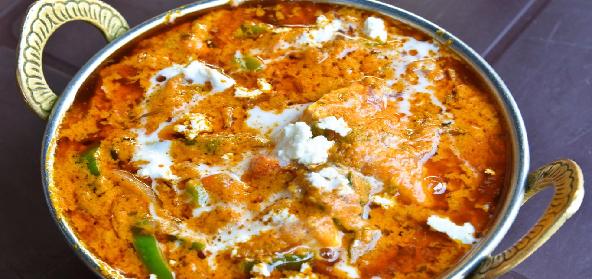
ANAANAS KA KORMA

Another lovely contribution – what unusual dishes you always did have, Priya  – no wonder your ‘dabba’ was so popular! From one of my oldest and dearest friends in life – Priya. Priya’s literally saved my bacon today – knowing I was too nauseated to even write about food, she sent me this! – Thank you, my dear!

My second contribution to Anu’s blog comes after so many memories were brought alive after reading her tales! Anu’s first tryst with alcohol brought memories of a party which we had hosted where just the tasting of the punch being prepared had us in merry spirits for the entire evening. Anu’s family food tales bring memories of the countless times we reached her house famished after some (mis)adventure  to the mouth- watering smells of food that greeted us.

Today’s story about Anu is fruity and so is the accompanying recipe!

One fine day Anu and the gang were sitting on the steps outside the geography dept. giggling, a daily occurrence, which you would know if you studied in Nizam College during those years! We decided that we were not going to attend classes that day – so what were we going to do? Much discussion happened and a newspaper consulted which ruled out a “morning show”.

Anu, at this point announced grandly, “I know the perfect thing “and with a follow-me gesture marched out of the gate. The rest of us did a ‘follow the leader’ and ran behind Anu to the bus stop, chased the only bus which went to Jubilee Hills, landed  at Check Point, which was a back of beyond remote location and ended up at Anu’s under construction house for a picnic!

We explored the house, found an old newspaper, spread it, sat down and promptly ate all our lunches and then half an later realized we were just as hungry. A good host, never to be defeated, Anu led us to the garden where we spent a most hilarious afternoon on the roof trying to get to the fruits! I can’t remember a more enjoyable picnic or food that tasted ever so good.

With markets flooded with pineapples – here is how to make a Anannas ka Korma for a fruity picnic. (A certain gentleman who does not approve of my cooking ghaas-phoos may substitute potatoes with mutton!)

ANAANAS KA KORMA

  • A few potatoes – cut and cubed
  • Half a sweet pineapple – cut and cubed
  • Onions 2 – finely sliced
  • A bowl of slightly sour curd
  • Ginger garlic paste
  • 2 table spoons of char-magaz (water melon seeds) or a handful of cashews ground to a paste
  • A bunch of mint, coriander and green chilies chopped
  • Mixed spices whole – pepper corns, cardamoms, cloves and cinnamon stick, jeera seeds
  • Salt, red chili powder, turmeric powder, garam masala powder, coriander powder – to taste
  • A few tea spoons of oil

Drizzle some oil on the potatoes and roast lightly either in the oven or pan (they were deep fried in the good old days).

Marinate the pineapple and roasted potatoes in a sauce made with the curd well beaten together with ginger garlic and the cashew paste, turmeric and red chili powder, garam masala powder, coriander powder. Keep aside.

In a karahi or non-stick pan, heat a couple of tea spoons of oil, add the whole spices, allow them to splutter, then add the onions and sauté till soft but still white.

Add the marinated vegetables together with all the marinade, then add the mint, coriander and green chilies, add salt and water.

Cover and simmer on slow heat till the vegetables are fully cooked. The pineapple should still be firm and the masalas should be cooked to a light brown colour.

Squeeze half a lemon on the korma and add a dab of ghee. Eat with roti or rice.

Never fear – when Priya is there – you’ll never go hungry!

Of disappearing loaves of bread and eggs!

turai dal

Some of the best memories of our childhoods were the summer holidays – many, many of them – that we spent with really large bunches of cousins at one aunt’s place or another. Kalyani pinni’s place was always THE top favourite for us to go to – for one, my aunt was a heart-as-large-as-the-world person, ready for a laugh at just about everything under the sun, a superb cook who really understood the thing about ratios and proportions vis a vis age and food – that small people needed large quantities of food to get through the rigours of playing, swimming, chatting and lazing about on the swing… that in between meals, said small people needed to be supported with prodigious quantites of murukus, laddoos and sundry other snacks! In other words, Kalyani pinni was the very best kind of egg!

Her laugh – completely inimitable – started out as a low chuckle in her throat, went down to a rumble in the tummy and then having gathered force on its journey, burst forth as an explosion of – sheer hilarity!

One of these holidays at her place – then in Nellikuppam, a small sugar growing town – overgrown village actually – where Parry Confectionery had a factory – was particularly memorable. There were some fifteen of us cousins, not counting a few aunts and pets and sundry other people – like the cook – who impacted our existence hugely! The house was bursting at the seams with some thirty people!

The days were spent in the swimming pool – with one epic session of six hours ending in a heat stroke for yours truly! Feeling sick and quite miserable in my tummy, I spent a few minutes wandering around the house looking for a cool place to lie down. Everyone else was still downstairs at lunch. Opened the door to my aunt’s room and the ‘coolth’ of the airconditioned room (a/cs were a rarity in the 70s!) beckoned irresistably. Quietly and gratefully curled up on my aunt’s bed, considerately leaving a large part of it vacant for her, sank into the land of nod – blissfully oblivious to the fact that I had been missed downstairs (how that was possible with so many kids was in itself a mystery!), looked for all over, search parties despatched to the library and the swimming pool and the club house and wherever else they could think of!

Finally, my uncle decided I’d turn up sooner or later and decided to go off for his afternoon siesta – and discovered one tired kid fast asleep in his bed!

They were a kind set of people – no scoldings resulted – though my aunt chuckled over it as a good joke!

With an army to feed, every mealtime was like a factory production! Remember Nellikuppam was a very small place so supplies were not easy to get in either! And so, when my uncle went off to Cuddalore to play a tennis match, he was charged with buying bread and eggs ‘enough’ for the next day’s breakfast. With so many people, he decided he couldn’t take a risk and came back with six large – very large – loaves of bread and six dozen eggs!

Now ‘enough’ is a very subjective concept as everyone from the Buddha to the Mahatma has been trying to teach the world – unfortunately their teachings hadn’t reached our lives yet! And so, next morning being a Saturday, my uncle went off for his usual early morning tennis game. Came back after a few hours, ravenously hungry and looking forward to fresh toast and a nice omelette. Like I said, ‘enough’ is a subjective matter. No bread for toast and no eggs for the omelette!  What??Whaat? What about all the stuff I bought yesterday? 

Oh, that? The kids finished it! Six loaves and 72 eggs!

While this conversation was going on, the demolishers of said eggs and loaves were quietly disappearing to various corners of the colony… we could play Injun when we wanted to!

He was a good sport so made do with some hastily rustled up upma.

For some reason, the one dish that really sticks out in my mind from that summer is the beerakai pappu that made an appearance frequently on the table – much to my delight because I love pappus in many forms!

Here’s the quintessentially Andhra staple…

BEERAKAI PAPPU/RIBBED GOURD DAL/PEERKANGAI PARUPPU/TURAI DAL

  • Beerakais -ribbed gourd – 2 large, tender ones. Peel, taste for bitterness (discard if bitter) and cut into 1 cm cubes.
  • Toor dal – 1 cup – pressure cooked till soft with 2 cups water and a pinch of turmeric.
  • Tomatoes – chopped – 2  – optional
  • Green chilies – 2 – sliced
  • Ginger – 1 cm piece – grated
  • Curry leaves – 2 sprigs
  • Coriander leaves – 2 tbsp  chopped
  • Salt
  • Pepper powdered – 1 large pinch

TO TEMPER:

  • Mustard seeds, urad dal and jeera – 1/2 tsp each
  • Asafoetida- 1 large pinch
  • Ghee – 1 tbsp

Heat the ghee in a saucepan. Add the mustard. When it splutters, add the jeera and urad dal.

Add curry leaves and asafoetida. Add the cut beerakai pieces. Add tomatoes if using. Cover and cook till almost done.

Add the  cooked dal, salt, green chilies and pepper and simmer for a few minutes more. Switch off, sprinkle coriander on top and serve with hot rice.

Guaranteed cure for most ills -including sunstroke, I’m sure!

Of our youngest aunt…

green gram kheer

“Malathi pinni, why don’t you remove your hair and hang it on a nail like my mom?” asks my four-year old brother Anand of my aunt – mom’s sister.

“Because my hair is actually growing out of my head!”

“Oh,” as he digests this in silence. Just how difficult this adult world is to understand – some people can hang up their hair and some can’t!

My mother “helps” her hair along with a switch which she attaches to her ‘real’ hair every morning and coils into a large bun – the de rigeur style for lady doctors in the ’60s.

“Malathi pinni, why can’t you sing like my mother ?” asks my other brother Arvind some weeks later.

“Because no one in the world can sing like your mother!” responds frustrated aunt who actually is a pretty good singer and has just spent the evening trying to sing her two nephews and niece to sleep!

My mother, on the contrary, is probably the most tuneless soul in the world – next only to my dad! But they sing – all the time! Persistently, tunelessly and loudly from my dad and equally persistently, tunelessly and reedily from my mom! We children obviously grew up with as much idea of music as a grunting rhinoceros or rather, three grunting rhinocereses, and therefore, when Malathi pinni actually sang, the shock to our systems must have taken some weeks to recover from!

“Malathi pinni, kodi guddu!” I shout out before hiding myself from her – it’s a game and kodi guddu (a hen’s egg in Telugu) for some reason, is a really hilarious name to call her! I am about a year and a half old. Malathi pinni is the only one with patience enough to play this game infinitely with me! She leaves on a trip and my mother goes to see her off at the station. Before she goes she asks me if I have a message for my aunt. Yes, I do. “Tell her kodi guddu!”

One of our favourite aunts, then as now, Pinni as the youngest aunt, was full of pep and go and willing to run around with sundry small folk – we must have tried her patience but she was a good sport!! She could sing, she didn’t care what people thought (I loved that!), said what she pleased, did what she wanted to… and was, come to think of it, still is – incredibly impulsive!

Here’s a tribute to a good sport and all in all good egg – Malathi pinni!

PESARA PAPPU PAYASAM/GREEN GRAM KHEER

  • Green gram dal (the yellow, skinless variety) – 100 gm
  • Jaggery – 1.5 cup – grated
  • Ghee – 1 tbs
  • Coconut milk – 200 ml pack (I use Dabur or any other good brand – freshly made at home is best, of course!)
  • Cashewnuts – 2 tbsp – chopped
  • Raisins – 1 tbsp
  • Cardamoms – 4 – peel and powder with 1/2 tsp sugar.

Fry the cashewnuts and raisins in ghee and set aside.

In the same pan, add the washed moong dal and fry for 5-6 minutes till a nice ‘nutty’ smell arises (Pinni, this ‘nutty’ smell is why I’m dedicating this post to you!! Apologies, but thanks for being a little nutty 😉

Add a little water – about  a cup and bring to a boil. Reduce heat and add the coconut milk and two more cups of water.

Let it cook on a low flame, stirring occasionally. Once the dal has cooked, add the jaggery and cook for 5-6 minutes more.

Adjust with a little more water if necessary – this is a not too thick payasam.

Add the cardamom powder, mix well and switch off. Add the fried nuts and raisins.

You can see the buildup of dishes to Ugadi, can’t you?

Appa’s coming!

pesarettu

Kutti ponne, kutti ponne,

Kovam kollade

Appa vara neram aachi

Chande podaade

Thus went a nursery song I used to sing to my daughter when she was very little – the lyrics basically meaning: Little girl, don’t get upset. It’s time for Appa (dad) to come home.

Much later, when the kids were slightly older – nine and five years old each… my husband worked for a year and a half  in the Middle East.

“How many more days till Appa comes, Amma?” is a question I’ve answered more often than I care to remember during those years. With a short stint in the Middle East and a longer stint in the deep South, ‘Appa’ was home only occassionally and therefore it was always a treat to be looked forward to. While my husband was in Muscat, the calendar would be marked off assiduously every morning as soon as they woke up – a whole two months before he was due to come! Day after day was crossed out, excitement continued to build till they could almost not contain it in the few days before he was due to arrive.

Long letters in childish scrawls starting, in Kanchu’s case, with a sentence that would begin at the bottom left hand corner of the page and meander gently, like the Danube across most of Europe, to the top right hand side corner – where, it suddenly realised there was no more room to go and would, without missing a beat, trickle down the right and then begin the long loop back to the left! Most of Kanchana’s letters had to be transcribed by pencil by me before being posted to hubby – he’d never have made head or tail of them otherwise!

Arch, as befitted an older sister and the one who could read books, wrote very ‘propah’ letters except that the style was imitative of whoever she was reading currently – so a series of missives styled after Enid Blyton, Frank Richards, Richmal Crompton or, as she became more ambitious, P.G.Wodehouse himself – reached distant shores!

Appa’s actual arrival lived up to all their expectations – waiting at the airport jumping around on one foot (K), till he came out, both of them launching themselves on to him and clinging on for dear life… the drive back home and the very serious business of opening presents! Two large suitcases, several bags, of which about a couple of kgs was his clothes and the rest loaded with goodies for everyone. Chocolates as though we owned Willie Wonka, perfumes and enough “smell things” as Kanch called them – to make our house smell suspiciously like a boudoir and on one “height of heights” occasion, roller blades for both girls! These last transformed them into instant celebrities at school – blades hadn’t hit Indian shores yet! What astounded me was the speed with which both became accomplished bladers – and how, like a good mom ;), i quickly learnt to turn this to my advantage – “yes, you can blade every evening – provided… ” Homework, finishing tea, putting away schoolbooks – all accomplished as smoothly as a hot knife cutting through the puddle that is butter in Madras in the summer!

Ah well… though I must admit it was never difficult to get them to finish tea… a much looked forward to communal meal everyday… the excitement of retailing the day’s news in detail, who was friends with whom, who had a fight… all the really important stuff life is made up of!

And a favourite teatime snack…

PESARATTU

FOR GRINDING

  • Sprouted green gram/whole moong/pesarlu/pacha payaru – 3 cups
  • Raw rice – soaked for two hours – 2 tbsp
  • Green chilies – 3
  • Ginger – 1″ piece – chopped
  • Salt
  • Jeera/cumin seeds – 1/2 tsp
  • Asafoetida – 1 pinch

OTHER INGREDIENTS

  • Chopped onions – 1/2 cup
  • Oil – a few tsp

Grind the soaked rice first till fine.

Add all the other ingredients and grind into a rough, knobbly batter, adding a little water if needed. It is important to NOT let this batter ferment.

Heat a dosa pan and smear a few drops of oil on top with a halved onion or potato.

Sprinkle a few drops of water on top. If they sizzle, the pan is hot enough.

Take a ladleful of batter and spread out on the pan into a round pancake – the pesarattu. Pour a few drops of oil all around the edge.

Sprinkle a few onions on top. Cook for a couple of minutes till the bottom is golden brown. Turn over and cook on the other side – another couple of minutes. Serve with ginger chutney or sweet and sour onion and tamarind chutney. (See links to these below).

Click for ginger chutney recipe

Click for onion and tamarind chutney recipe

And don’t let anyone fool you into thinking that coconut chutney is a fitting accompaniment – it is NOT!

Also, if you have political ambitions, you just might want to check out the MLA pesarattu – filled with upma!

The heart should blossom… like a neem flower!

ugadi pachadi

Gulabi poovai navvaali vayasu…

Something something, something something tum pum pum…

…goes an old Telugu song – the Telugu version of the title song from the Hindi blockbuster Yaadon Ki Baraat… a song which for some reason I’ve always sung (if what  I do with lyrics and music can be called singing, that is!) as Ugadi poola vidagaali manasu… well, in my defence I still don’t see too much difference between singing, The heart should laugh like a rose (the original) to my version which means, The heart should blossom like a neem flower – the Ugadi flower! In fact, i think mine should become the standard version – it’s a healthier version after all with neem flowers and everything! And you know what they say about a romantic heart in a healthy body, right? Oops, was that a healthy mind in a healthy body? Never mind – everyone has a right to poetic licence – whether Juvenal or me!

So back to my healthily romantic Ugadi flower – the abundantly-produced-during-this-season flowers of the neem tree – smelling as sweet as the rest of the tree’s products – bark, twigs, leaves, evn the flowers themselves – are bitter to the taste! A bit like some people I know!

Ugadi is round the corner and memories of many earlier Ugadis come flooding back… my children were always excited about this festival because the evening before, after school and the workday were done, we used to set out to one of the temple markets close to where we live and buy exciting stuff like mangoes, mango leaves to decorate the doorway to the house and most importantly – coloured kolam (muggu/rangoli) powders. Home, tea-d, bathed, we’d get down to the serious business of decorating our threshold – each of us got one area and you could draw what you wanted in it! Mine, of course, tended to be traditional and the ‘dotted’ variety whereas the kids, who had not learnt any of the traditional stuff, decided what they wanted to draw and colour. Rules were you could help if help was asked for, admire but not criticise – anyone’s works of art! Festival, right?

And so we had pink elephants with one orange eye and one purple, finished off with a green tail – all needing to be explained because I thought it was a mouse (!), mice which looked like earthworms, trees which looked like ghosts – all frolicking across our threshold! We may never have won a prize for art but definitely for spreading joy – in the form of many half-concealed giggles from neighbours!

Kanch’s exuberance would always overflow her limited (even now!!) artistic ability but her heart would overflow with the joy of creation until she couldn’t bear it any longer… and I’d get squeezed and hugged to within an inch of my life! One memorable occasion, she hugs me and asks, “Can I become you when I grow old?!!!” Ugadi that year was THE BEST! Weel, she may not want to repeat that today, but sadly K, we do end up being more like our parents than we realise!

Then of course, festival food was always to be looked forward to… Ugadi pachadi, pulihora, roast baby potatoes, chakkara pongal and whatever else they wanted…

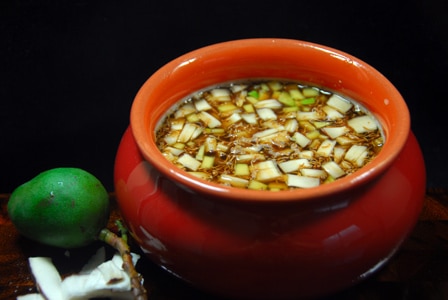
So here is one of our favourite foods for Ugadi… the celebration of life’s flavours – sweet, sour, salty, chili hot and astringent (iguru)…

UGADI PACHADI

  • Raw mango – 1 – chopped finely
  • Neem flowers – washed well – 2 – 3 tbsp
  • Jaggery – 1.5 cups – grated
  • Green chili – minced – 1 cm piece
  • Salt – 1 pinch
  • Tamarind water – from a small marble sized ball of tamarind soaked in 1 cup water.
  • Water – 2 cups

Mix everything well and let the jaggery melt completely. Chill and serve.

I don’t serve this only for Ugadi but several times through the long Indian summer – it’s a fantastically ‘cooling’ drink.

And here’s the link to the song from the movie – my version is yet to be shot but this one is passable 😉

Click for song