Lime rice: Of grandmothers and grand daughters and lime lice!

“Ammamma, nuvvu vellipothunte naaku gundelo baadha,” lisps a little two-year old clutching her stomach to illustrate her pronouncement (Ammamma – grandmom in Telugu – my heart pains when you go away!). Her ammamma, of course, melts into a puddle and decides to stay on for a few days longer.

My mother is a hot favourite with all little kids – I have yet to see a little one not make a beeline for her in a room full of adults – even if they have never seen her before – some people, I think, possess this rather magical quality of innocence which only other equally innocent souls can recognise – and that, of course, is always the little ones!

There is no trouble that is too much for her to take – if a child is involved. And so, once, when this same granddaughter of hers (my older daughter Archana) is spending a holiday with her as a three-year old (yes, those days three-year olds did spend holidays with grandparents and no, the parents were not in attendance and yes, it was not just perfectly all right, both grandparent and granchild had a ball!), I was due to pick her up from Hyderabad (I had been on a business trip to Delhi) and take her back with me to Madras. My mom is obviously a little sad that the baby is leaving and asks her, “So Archu, did you have a nice holiday? Did you do everything you wanted to and did you get all your favourite foods?”

“Yeth, ammamma (did I mention the pronounced lisp which took her years to overcome?!), but you forgot to make one thing for me” – rules the little tyrant!

Ammamma is obviously surprised (the menu everyday for the entire household has been set around what a three-year old child wants to eat!) but asks her what.

“You foggot to make me lime lice!” (lime rice!)

The household is galvanised into instant activity as someone runs to pluck limes from the tree (only the freshest and the best for the granddaughter!), someone else sets the rice on and voila, fifteen minutes later – a plate of the her dream dish is set before the princess!

On the Saturdays that I used to have off from work, one of our favourite things was to get on to my pitta-pitta-mum-mum (my 50cc moped – christened onamatopeically by the same daughter when she was about eight months old!) with our lunch boxes and a packet of chips and sputter off to the Guindy Zoo – very close to home those days. We’d wander around for a while looking at various animals before settling down to my daughter’s favourite activity – watching the crocodiles! Once she’d had her fill of this (actually, once I’d had as much of the reptilian stuff as I could stand and as soon as I could persuade her that maybe peacocks were more interesting!), we’d move away and sit down to have lunch. She got to pick the meal – every single time and she always picked “lime lice”!

So, this summer, I offer to make her “lime lice” for old times’ sake and get a dirty look for my pains – we do NOT like lime rice now! Strangely, recovering from a bug, that is what I feel like eating right now! Illness makes you regress?

Here it is – one of the hoary old standbys of the South Indian kitchen…


LIME RICE


  •  Cooked rice – 2 cups (Warangal mussoori, Sona mussoori, Ponni, samba are the best varieties for this, though any non-sticky rice will do)
  • Juice of 1.5 limes – depends on the tartness and size of the limes
  • Sesame oil – 2 tsp
  • Turmeric powder – 1/4 tsp
  • Green chilies – slit – 1 or 2
  • Grated ginger – 1/2 tsp
  • Curry leaves – 2 sprigs – crisped in the microwave for a minute
  • Asafoetida – 1 generous pinch
  • Salt
  • Sugar – 1/2 tsp
  • Cashewnuts – 1 tbsp
  • Mustard seeds – 1/4 tsp
  • Chana dal (bengal gram) – 1/2 tsp
  • Urad dal – 1/2 tsp

Heat the oil and fry the cashewnuts till pale gold. Remove and set aside.

Add the mustard seeds to the same oil and let them splutter. Add the chana dal and urad dal and let the dals turn golden.

Add the chilies, ginger and turmeric. Saute quickly and turn off the flame. Add the salt, sugar and lime juice and mix well. Add the cooked rice and stir well to combine. Sprinkle the crushed curry leaves over the top and sprinkle cashews – if you haven’t already finished them by now!


Pack it in a dabba and carry it to the crocodiles – no, the crocs won’t like it but you can watch them and eat it!

Pro tips: The saga of the travelling dabbas…

“R, can you return the two dabbas (food containers) that I brought last time with some sweets in them?” asks a friend who is known for her housekeeping skills (I am slightly nervous every time she comes to my less-than-well-kept house and  there is a flurry of clearing up, hustling grumbling family members to clear up and so on… before her visit. Fond as I am of her, unannounced visits cause me a little (hmm… !) stress!

Her daughter, used to her mom’s standards of housekeeping, once asks me innocently, “What is this brown spot on the tablecloth, auntie?” I examine it and scratch at it tentatively with a fingernail. It comes off – a powdery brown substance. A drop of dal (okay, more like a few drops... okaaaay... a spoonful, but not more, I swear). Oh, that’s just some food that someone must have dropped and I didn’t notice, I shrug it off… I think… till I notice the look of horror on the seven-year-old’s face! Poor kid is torn between her fondness for me and her disapproval of my slapdash housekeeping methods! Thankfully, she is young… the fondness wins and we are all much more chilled out now! (I have to admit, though, that it gave me a few bad moments in my far-off youth!)

“Sure, sweetie. But which are your dabbas?” R queries innocently as she throws open her store cupboard, filled with dabbas of various sizes and shapes. My first friend examines the cupboard carefully… “No, I don’t see mine anywhere”, she says.

“Never mind, why don’t you just take any two that you fancy?” comes the nonchalent response!

“But… but… whose are these? What if I take away someone else’s dabbas?” asks my very “correct” friend, eyes widening in shock!

“Oh, never mind that. I’ll give them someone else’s dabbas! After all, these things are in circulation all the time anyway – how does it matter with whom they end up?” she asks blithely!

My other friend thinks it over and like the good sport that she is, laughs it off – even though she loves her dabbas!

And so, over the past two decades, we have gone through life with great faith – that some dabbas would appear when you need them, that they will go to the person who needs them most at that point in time. At some point, when we are all out of dabbas, someone will go out and buy some more and the merry-go-round starts again! God is in his heaven and all is right with the world – as long as dabbas are kept in circulation!

This story is just to warn you, that when you visit me, please don’t look for co-ordinated stuff on my kitchen shelves – I have every shape, size and colour under the sun – in ones and twos! The co-ordinates are out there travelling the world! Maybe, someday they will come home to roost… or maybe they will choose to settle in other lands far away from home… I just hope they will always be filled with good food 🙂

Like this pro tip from R about the proper way to treat dabbas, my post today is about other pro tips in the kitchen – which I have made up, learnt… in a forty-year culinary journey…


PRO TIPS

  • When you make either hung curd (yogurt) or cottage cheese at home, don’t discard the whey/water that oozes out. Save it, freeze it in idli moulds (you will be amazed at the versatility of these little containers – see pic). Demould and freeze in ziplock for using instead of water to knead chapathi or bread dough – the softest imaginable! Yeast positively loves this whey!

  • After you’ve taken your baking out of the oven, make use of the residual heat to crisp up a tray of whatever seeds you need to roast for powders – coriander (dhaniya), cumin (jeera), red chili, pepper – whatevs!

  • When you start your cooking for the day, wash and crisp up a handful of curry leaves in the microwave – takes 2 minutes on high. As you finish each dish, just crumble 1 -2 tbsp of the curry leaves on top of the curry/rasam/sambar with your fingers. Adds a fantastic fragrance and people don’t push them to the side of the plate when they’re eating!

  • Every 3-4 days, grind together 6-7 or more green chilies, 2-3 inches of ginger with a pinch of turmeric, a pinch of salt and a tsp of oil. Store this in a small container in the frig. Add it to gravies or masala curries right at the beginning – when you start frying onions – add tremendous flavour and saves you lots of time in peeling, chopping etc. Grind garlic also along with this if you like.

  • To get really, really thick curd (now I’m giving away a secret I have refused to tell kings and statesmen  😉 – the temperature of the milk should be hand hot. Add 1 tsp of skimmed milk powder (NOT whole milk powder) and a tsp of culture. Pour from a height from one vessel to another (like how you would cool a glass of coffee) 2-3 times. The culture breaks down into smaller colonies, multiplies faster and sets in 2-3 hours in Madras weather – slightly longer in colder weather.

  • Making tzatziki? The Greek cucumber yogurt dip like raita? Save the water and use it to make buttermilk with a little yogurt, salt and powdered cumin later – delicious, cooling and zero-cal!

  • I read a lot of recipes  where people ask you to discard the water in which spinach has been boiled or blanched. You lose most of the nutrients that way. Just microwave the spinach with 1 tbsp water and cool before you puree or process – there is no water to discard! The same goes for cooking it on the burner.

  • Want a rich, deep colour to your gravies? As soon as you put the oil/ghee on the burner in a pan, add a tsp of sugar and let it caramelise on low heat before add the rest of the ingredients. Colour and flavour!

  • No time to make a raita? No veggies for said raita? Or a chutney to go with dosa or idli? Add a piece of pickle or pickle gravy to a cup of whisked yogurt with a quarter tsp of sugar and mix. Add chopped onions if you have the time. Not if you dont!

  • Freeze limes. Want a lemon sponge? Or lemon rasam? Or a zingy salad? Take out one, grate the whole caboodle – zest, lime and all. Oops, discard seeds as you grate!

Okay, I think that’s enough giveaways for today!

Enjoy and set the dabbas free!

Fruit pachadi: Of giggly ghosts from the past and other readers!

“Chuckle, chuckle, tee… hee… giggle giggle… hahahahaHAHAHAHA… THUD… OUCH!” goes my eighteen-year old brother Arvind. It is a lazy Saturday afternoon and he’s lying in bed, or rather falling out of bed, engaged in his favourite occupation – one of Wodehouse’s books!

Cut to some twenty years later and I freeze – there are ghosts in the house! There are muffled giggles, preceded by muted teehees and followed by louder chuckles, culminating in belly-warming laughter! I shake myself off – there are NO such things as ghosts. It’s two in the afternoon, so I am pretty successful! Now, if it had been the witching hour, I’d have probably pulled the blankets over my head (in Madras? Really? Blankets? You buy that??!!) and shivered in a display of the utmost pusillanimity with no shame!

But, like I said, it is afternoon and armed with nothing more menacing than my sharpest knife in one hand and an open dabba of red chili powder in the other, I tiptoe to the bedroom… to find my daughter Archana, in an eerie re-enactment of my brother’s enjoyment of Wodehouse’s unmatched comedy, rolling on the bed, clutching her stomach as she tries to control her laughter!

Having started reading when she was short of five years old, we have never succeeded in (and to tell you the truth, having gone through the same thing in my own childhood, I never really tried very hard!) in separating Arch from a book for more than a few minutes at a time! The only punishments that I ever levied on her (and there weren’t too many of these!) were to withdraw reading privileges for a day or two depending on the seriousness of the infarction. These were always extremely painful – for both of us – she’d look at me as I read with such pleading in her eyes that I had to forgive her or put myself through the same punishment – of not reading! Both happened!

Now my little one, on the other hand, hated sitting down for longer than three minutes at a stretch and while she could read perfectly well by the time she was six, the agony of missing out on some game that was going on outside the window was too much to bear – the book was abandoned to its fate! The first time she finished reading a book – it was one of the Secret Seven series by Enid Blyton, she was about seven and the sense of achievement (she’d agonised over it for four months!) couldn’t be contained within her pores – as she danced, jumped on and off chairs, ran around the house and generally did a pretty decent imitation of an excitable monkey! Today, she is another bookworm – well and truly converted!

Obviously, such an achievement had to be celebrated – as we do with everything else in our lives! With this completely yummy, never-enough, sweet-sour-hot dish which is served at all Tamil weddings and other occasions…


FRUIT PACHADI

(Recipe courtesy my mother-in-law)


  • 2 cups mixed fruit – chopped – apple, mango, banana, grapes (these are left whole), pineapple
  • Green chilies – sliced – 2
  • Tamarind paste – 1 tsp
  • Jaggery – 1.5 tsp
  • Chili powder – 1/2 tsp
  • Mustard powder or paste – scant half a tsp
  • Salt
  • Turmeric – 1/4 tsp

TO TEMPER


  • Red chili – 1 – broken
  • Oil – 2 tsp
  • Mustard seeds – 1/2 tsp
  • Urad dal – 1/2 tsp
  • Asafoetida – 1/8 tsp
  • Curry leaves – 2 sprigs – i like to microwave these and crush them over the dish at the end

Heat the oil in a pan and add the tempering ingredients. Add the green chilies and fry. The urad dal must be fried till golden brown. Add the jaggery, salt, chili powder  fruit, tamarind paste and a little water – about 1/2 a cup. Cover and cook for a few minutes till the fruits are tender but retain their shape  a little. Some of the fruit will cook over and form a thick gravy – great!

Add the mustard powder and continue to cook for 2-3 minutes more. Switch off and serve as a side with a meal.


I just stick my fingers in and lick them off!

Perfect accompaniment to Wodehouse!

Pic: Courtesy internet

Sweet kozhakottai : Of Gods, glue and umbrellas!


he hospital (huh?) to ask my mom what we could use as a substitute. She suggests we mash up some left over rice with water and it will act as a glue. She also leaves it to us to figure out how much of each! And so we mash – three cups of rice – just in case it is not enough! Add a lot of water – again we are not my mother’s children for nothing! And make a vessel full of a pale grey “thing” – the grey being added from all the grubby hands!

It doesn’t look quite right and – importantly, it doesn’t seem to glue anything together except for our clothes, hair, hands, feet and sundry other things in the vicinity. Many cups of rice later, we have what we think is a workable glue. We resume the sticking – unfortunately the streamers seem to have stuck a bit to each other – not following instructions obviously – and we have serious repairing to do. When I see school kids today being “helped’ by parents to finish school projects, I always think of how much fun it was to learn without parental supervision! And how much we actually learnt…

The umbrella is now ready – or rather… almost – we have forgotten one important element – the central ‘stick’ which has to hold up the umbrella!

We run around excitedly looking for things that can hold it up. Broom sticks are discarded as being too weak to hold up the structure plus we have a vague suspicion (not having been brought up with much ritual or tradition, the suspicion is necessarily vague!) that maybe a used broomstick may not be quite kosher for a God! We are making an umbrella for Ganapathi, the elephant-headed god to celebrate his birthday!

Casting around helps – we find a knitting needle and blithely, with  no thought of asking the owner (my mom!) for permission, we cover it with some shiny paper and lots of glue. All our knowledge of physics is exercised in figuring out how to make the umbrella stand straight and sticking the needle up through the shiny discs we created in para 1 – if you forgot how, I suggest you study hard! The standing straight bit defeats us – we use many ingenious ideas but the needle is too heavy! Finally, we decide that Ganesha will not mind having the umrella lean against him. We are satisfied with this solution and a hard day’s work!

The next day – Ganesha’s actual birthday, is always exciting – because there is the excitement of waiting for my dad and brothers to come back with a mud idol of the god. Pooja done, there was the excitement of seeing how this year’s kozhakottais (modakas) have turned out – my mother’s were always unpredictable! Sometimes delicious, sometimes just lumpy! The other stuff – pulihora or vangi bhath, potato fry, koshumbri, chakkara pongal or payasam, wadas and sundal were always yummy though and so we were as happy as… little Ganeshas with full tummies!

Here are the kozhakottais, Ganesha’s favourite sweet and a completely guilt free steamed pudding!


KOZHAKOTTAI/MODAKA (makes about 24 little ones)

FOR OUTER COVERING


  • Rice flour – 1 cup
  • Water – 1 cup
  • Salt – 1/4 tsp
  • Oil to grease palms


Add salt to water and bring to a boil. Pour in the rice flour, stirring continously. It will form a lump around the spoon in about two minutes. Switch off and cool a bit. When cool enough to handle, grease your palms and knead the dough free of lumps. Cover with a wet cloth and set aside.


FOR STUFFING/POORNAM


  • Jaggery – 3/4 cup – grated
  • Water – 1 tbsp
  • Fresh coconut – grated – 1 cup
  • Dried ginger powder (sonti/chukku) – 1 pinch
  • Cardamoms – 2 – peeled and powdered


In another pan, heat the water and jaggery together till jaggery melts completely. Strain through a muslin filter to remove impurities. Heat the syrup along with the ginger powder and coconut for 6-7 minutes till it is cooked and thick but you can still turn it around with a spoon easily. If you cook it beyond this stage, it becomes very chewy – also very yummy and sold in schools as “stickjaw”! Add the cardamom, mix and switch off.

Transfer to another dish to stop the cooking process.

Take a small lime-sized ball of rice dough between greased palms and using your fingers and palms, shape it into a saucer. Place a small ball of filling in the centre and very gently bring the edges together, forming a cone at the top (reminded me of our rice glue!)

Make many – please sit down – it’s going to take time!

Steam for 7-8 minutes and cool.


Serve the Ganesha who’s tired of the umbrella leaning against his trunk!

Apple pan puff : Of a ten-year old’s culinary map of the world – in the 70s!

A couple of months ago, I got a surprise parcel from one of my readers – long-lost cousin Satya – all the way from New Zealand! No matter how old you grow, the excitement of opening a parcel, not knowing what it has inside – is well… rather like not knowing the sex of the baby till it is born, right?!

So, in my desire to get it open, I tear at the strings and pull away the cellotape, rather than step into the kitchen and pick up a pair of scissors to do the job neatly! There are three books inside – three lovely cookbooks – all about New Zealand cuisine – of which till now, I know less than nothing except that they probably eat a lot of lamb – based on a picture in one of my childhood books – of a herd of sheep dotted all over the greenest of hillsides… being vegetarian, I haven’t really thought much beyond the lamb!

But these books are beautiful – and I devour them – planning quickly what vegetarian substitute I can use – and oh, I was right – they do eat a lot of lamb!

Which takes me back to what we knew of the world as children – gleaned largely from various Reader’s Digest encyclopaedias, atlases and travel books, supplemented with large doses of Enid Blyton, Richmal Crompton (the creator of the “William” series) and Frank Richards (who immortalised Billy Bunter!) and a few others of the same ilk. Enid Blyton, of course, was past mistress at making the most mundane food sound like manna – when she spoke about tomatoes and lettuce, you literally drooled! Even such hardcore vegetarians as we were, potted meat and steak and kidney pie sounded completely delicious – we had no idea what either of these was!

Of American books, we didn’t really have many – I don’t think these really reached Indian shores till decades after they were published. Louisa May Alcott, as delightful as she was, did not wax eloquent on food. Neither did the westerns that we fell in love with. Other than an occasional reference to beef and beans and something strange called “bear’s paws” (I found out years later that this was another name for doughnuts – not that we knew what doughnuts were back then). Sundry Red Indian (ok, ok, native Americans – we hadn’t heard of a thing called political correctness those days!) stories did provide a clue – to things like pemmican (which sounded more like a fur coat than anything else!), jerky and of course – corn – from the story of the founding fathers! For all we knew, this was what all Americans ate all the time – bread and corn and apples (from all the trees planted by Johnny Appleseed!) and… pemmican!

The word “pizza” had not swum into our ken yet and we wouldn’t have associated it with America if it did!

World cuisine opened up only well into our teens – come to think of it, a lot of North Indian cuisine also entered our lives only about then – and later… like this new New Zealand cuisine, which Satya has opened up for me…

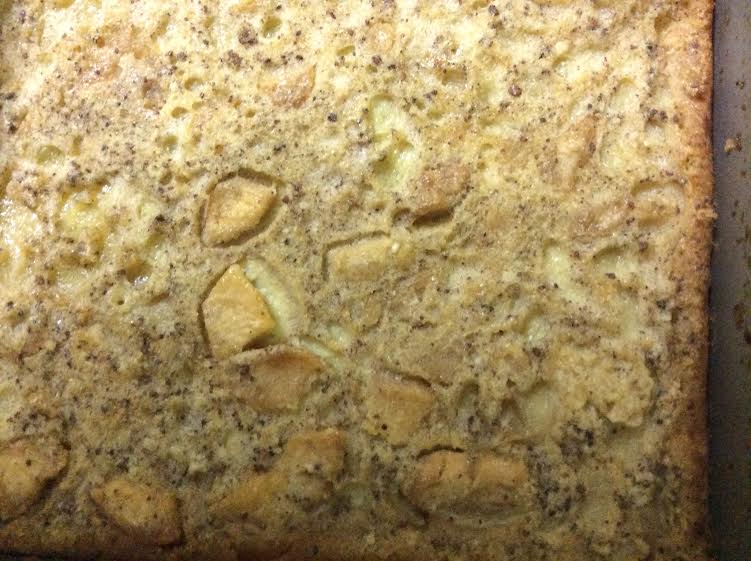
Presenting this really lovely dessert – a sort of hybrid between an apple pancake, an upside down tipsy cake and a waffle – easy peasy to make…


APPLE PAN PUFF (adapted slightly from a recipe in Annabel Langbein’s book)


  • Apples – any crunchy, sweet variety – I used Simla – 5 – peel, core and slice. Substitute any other slightly tart fruit too
  • Sugar – 2 tbsp
  • Butter – 2 tbsp + 1 tbsp
  • Cinnamon powder – 1/2 tsp
  • Milk – 1 cup
  • Eggs – 2
  • Baking powder – 1/2 tsp
  • Flour – 1/3 cup
  • Vanilla essence – 1 tsp
  • Any sweetish wine – 3-4  tbsp I used a gooseberry wine someone gifted me and I want to finish!
  • 2 tbsp  honey
  • Whipped cream to serve (yes!)


In a baking pan, drop in 1 tbsp butter and honey. Heat in the oven (at 200 C) or on the burner till it begins to caramelise. Add the apples and cook till they begin to caramelise – about 6-8 minutes. Pour in the wine and cook till it evaporates.

Mix the cinnamon, flour, baking powder and sugar.

Add the milk, eggs and vanilla and whisk till smooth. Pour in the melted butter and whisk further.

Pour over the apple base and bake for 30 minutes till golden and puffy around the edges.


Serve war or cold with cream and sugar sieved over if desired – I didn’t need it. It’s a soft, apple-y cake/pancake.

Will explore further and tell you what New Zealanders eat – by way of veggie food, at least!